

Medically reviewed by
Joseph H. Krug, Jr., MD
If you’ve had a comprehensive eye exam and been diagnosed with a vision problem, you’re facing an important question: which correction method is right for you? The answer depends largely on your age, lifestyle, and how your vision is likely to change in the coming years.
This article breaks down your options by life stage to help you understand which solutions make sense at different ages.
Vision Correction for Children: Starting with Glasses
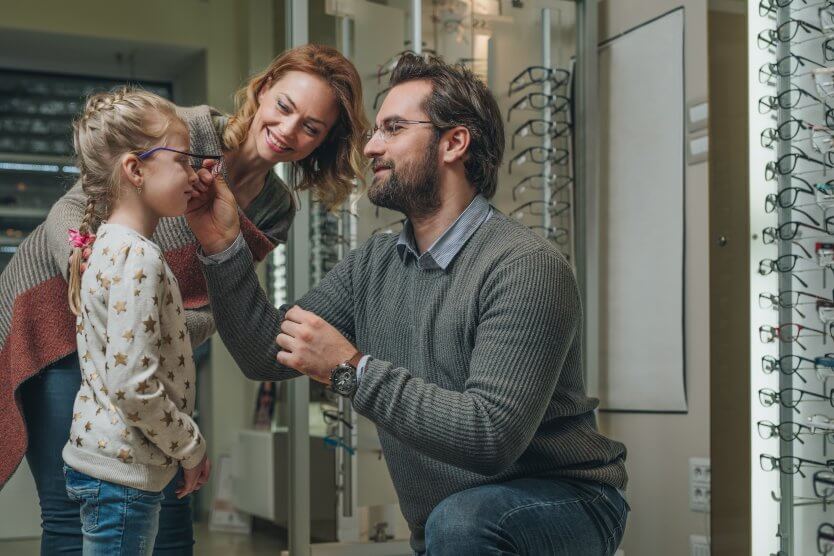
Children under 12 almost always start with prescription glasses, and for good reason. Young patients don’t yet have the dexterity or responsibility needed for contact lens care, and their eyes are still developing rapidly. According to the National Eye Institute, early vision correction is crucial during the critical development period before age 7.
Why glasses work best for children
- No infection risk or maintenance requirements
- Easy for parents to monitor
- Durable enough for active play
- Can be updated as prescriptions change frequently
- Essential for treating amblyopia or strabismus
For active children, polycarbonate lenses offer impact resistance 10 times greater than regular plastic. Prevent Blindness reports that protective sports eyewear prevents more than 90% of sports-related eye injuries.

Teens and Young Adults: Adding Contact Lenses
Around age 12-13, patients can transition to contact lenses if they demonstrate responsibility for lens care. Modern contact lens materials provide excellent oxygen transmission and comfort, making them ideal for active teenagers.
The daily disposable advantage
For teens and young adults, daily disposable lenses offer the safest option. Research in the British Journal of Ophthalmology shows daily disposables have significantly lower infection rates because bacteria and protein can’t accumulate overnight.
Important safety reminder
The CDC reports that improper contact lens care causes approximately 1 million doctor visits annually. Proper hygiene is essential: wash hands before handling lenses, never sleep in contacts unless approved by your doctor, and replace lenses on schedule.
Even dedicated contact lens wearers should maintain backup glasses for sick days, eye infections, or simply tired eyes.
Ages 18-40: The LASIK Sweet Spot
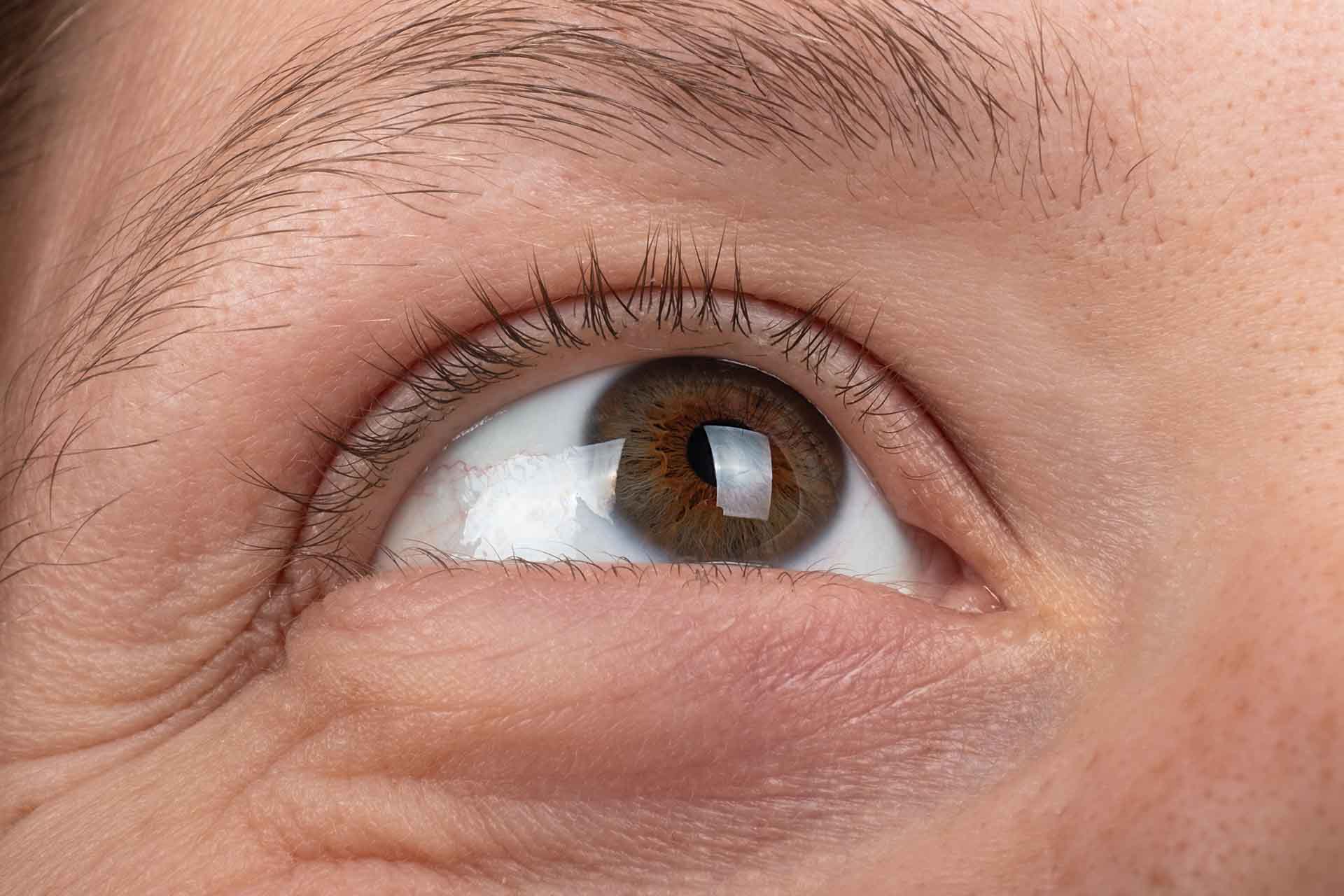
Around age 18, prescriptions typically stabilize, making patients eligible for LASIK. This age range is ideal for laser vision correction because the eyes have finished growing and presbyopia (reading difficulties) hasn’t yet begun.
Understanding LASIK
LASIK reshapes the cornea using precise laser technology, permanently correcting nearsightedness, farsightedness, and astigmatism. According to 2024 data from the International Society of Refractive Surgery, 95% of LASIK patients achieve 20/40 vision or better, and more than 90% achieve 20/20 or better.
Key LASIK eye surgery requirements
- Age 18 or older with stable prescription (unchanged for one year)
- Adequate corneal thickness
- Healthy corneas without keratoconus or severe dry eye
- Realistic expectations about results
Most patients notice improved vision within 24 hours and return to work within 1-2 days. Recovery is typically quick with minimal discomfort.
Ages 40-65: When the Equation Changes
The Presbyopia Challenge
Presbyopia affects everyone around age 40, when the eye’s natural lens loses flexibility. According to the National Eye Institute, this condition progresses until about age 65, requiring increasingly strong reading correction.
How presbyopia affects your options
- Glasses wearers need bifocals, trifocals, or progressive lenses
- Contact lens wearers need multifocal contacts or monovision
- Previous LASIK patients need reading glasses despite good distance vision
Progressive Lenses: The Modern Solution
Progressive lenses provide seamless vision at all distances without visible lines. Modern progressive technology offers wider reading zones with less peripheral distortion than older designs. Professional fitting is crucial – research shows improper measurements cause 40% of progressive lens failures.
Explore our professional optical services and prescription glasses options with expert fitting.
Why LASIK Becomes Less Ideal After 40
While LASIK can still be performed after 40, several factors reduce its value:
- Can’t correct presbyopia (reading difficulties persist)
- Natural lens continues changing over time
- Early cataracts may be developing
- May need cataract surgery within 10-20 years anyway
Clear Lens Exchange: Addressing Multiple Issues
For patients over 40-45, clear lens exchange/refractive lens exchange (CLE/RLE) often provides superior long-term results. This procedure replaces your natural lens with an advanced artificial lens before cataracts develop.
Why CLE/RLE makes sense after 40
- Corrects presbyopia permanently with multifocal lens implants
- Prevents future cataracts (you can’t develop cataracts after lens replacement)
- No regression over time
- Wider correction range than LASIK
- One-time procedure for most patients
Comparing Vision Correction Solutions at Age 50
| Factor | LASIK | Clear Lens Exchange |
|---|---|---|
| Reading glasses needed | Yes | No (with multifocal IOL) |
| Future cataract surgery | Required (age 65-75) | Never needed |
| Enhancement procedures | 10-15% need one | Rarely needed |
| Long-term stability | May change with aging lens | Stable indefinitely |
Modern IOL technology offers remarkable capabilities. According to research in JAMA Ophthalmology, 80-85% of multifocal IOL patients achieve complete spectacle independence. Options include multifocal IOLs for multiple distances, accommodating IOLs that mimic natural lens flexibility, and toric IOLs that correct astigmatism.
Neither LASIK nor CLE/RLE is covered by vision insurance when performed before cataracts develop, but many patients find the peace of mind and lifetime vision correction worth the investment.
Over 65: The Cataract Factor
By age 80, more than half of Americans have cataracts or have had cataract surgery according to the National Eye Institute. For patients over 65, cataracts often drive vision correction decisions.
Modern cataract surgery is a refractive procedure. With premium IOLs, you can expect after cataract surgery to achieve distance vision correction, astigmatism correction, and near/intermediate vision – potentially eliminating glasses dependence. Standard cataract surgery with monofocal IOLs is covered by Medicare and most insurance plans once cataracts impair vision sufficiently.
Making Your Decision
The ideal vision correction solution depends on your age, prescription, eye health, lifestyle, and long-term goals. What works perfectly at 25 may not be ideal at 45 or 65.
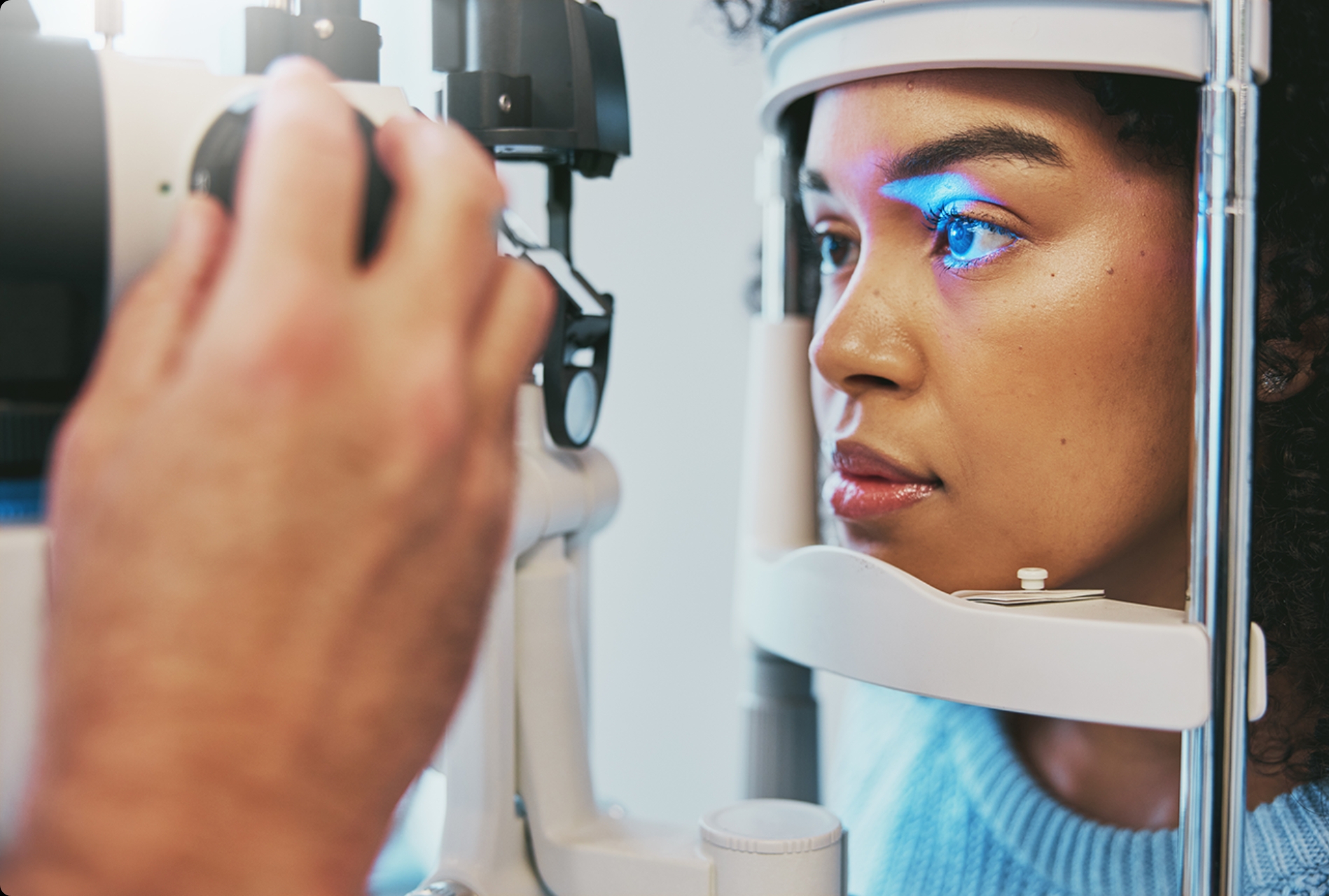
Start with a comprehensive eye examination including corneal measurements, dry eye evaluation, dilated examination, and discussion of your lifestyle and vision goals. Our experienced Charlotte ophthalmologists and optometrists will help you understand which options best fit your needs.
Frequently Asked Questions
Will I eventually need glasses no matter what?
Presbyopia affects everyone by the 40s. However, multifocal IOLs through CLE/RLE provide the best chance of complete spectacle independence after age 40, though 10-15% still use readers for very small print.
Can I have LASIK if I have astigmatism?
Yes, modern LASIK effectively treats astigmatism up to approximately 6 diopters. LASIK often corrects astigmatism more precisely than glasses.
Is lens replacement surgery safe for someone in their 40s or 50s?
Yes. CLE/RLE uses the exact same procedure as cataract surgery, one of the safest surgeries performed worldwide. The American Society of Cataract and Refractive Surgery reports serious complication rates under 1%.
What if my vision changes after surgery?
LASIK results can regress slightly (5-15% need enhancements). CLE/RLE results remain stable because artificial lenses don’t change, though other age-related conditions may still develop.
Schedule Your Comprehensive Eye Exam
Ready to explore your vision correction options? Start with a thorough examination to understand your current eye health and discuss which solutions best fit your needs.