
Medically reviewed by
S. Heather Bell, OD
Online eye tests promise convenience: check your vision from home, skip the doctor’s office, and get a glasses prescription delivered to your phone. For about $95, online eye care services offer what seems like a modern solution for busy people.
But here’s what those online tests don’t tell you: they only measure whether you can see letters clearly. They can’t detect glaucoma, diabetic retinopathy, macular degeneration, retinal detachment, or the dozens of other conditions that cause blindness. They can’t see the early warning signs of diabetes, high blood pressure, or even brain tumors that show up during comprehensive eye exams. According to the American Optometric Association, comprehensive eye exams can detect more than 270 systemic health conditions.
The difference between an online vision test and a comprehensive eye exam isn’t just convenience—it could be the difference between catching a serious condition early or discovering it too late.

What Online Eye Tests Actually Measure (And What They Miss)
Online vision tests work for a very narrow group:
- Adults 18-40 with no health conditions
- Someone who had a comprehensive in-person exam within the past year
- People only needing a glasses prescription update (not contact lenses)
- Those with simple refractive errors and no history of eye disease
Even if you fit this profile, online tests still miss critical information. That headache you’re attributing to stress? Could be high blood pressure visible in your retinal blood vessels. Those occasional blurry moments? Could be early diabetes affecting your vision.
Who Shouldn’t Rely on Online Vision Tests
Here’s who it’s not so likely to help: everyone else.
- Outside the age range of 18-40
- Vision difficulties from mild glaucoma to cataracts
- Complicating medical factors such as high cholesterol or diabetes
- Family histories of eye problems or wear contact lenses – which can alter the shape and condition of your corneas
If any of the above apply, you need to spend time in the office of an optometrist or ophthalmologist in Charlotte. You may not have healthy eyes, even if you see clearly. You may feel comfortable in your contact lenses. However, a doctor can see signs of excess contact wearing that can damage the cornea.
Writing prescriptions for glasses is a low priority for your doctor, who’s there to assess not just visual health but your health overall. For instance, an in-person exam can reveal changes in blood vessels that result from hypertension and may increase the likelihood of a stroke.
What a Comprehensive Eye Exam Really Involves
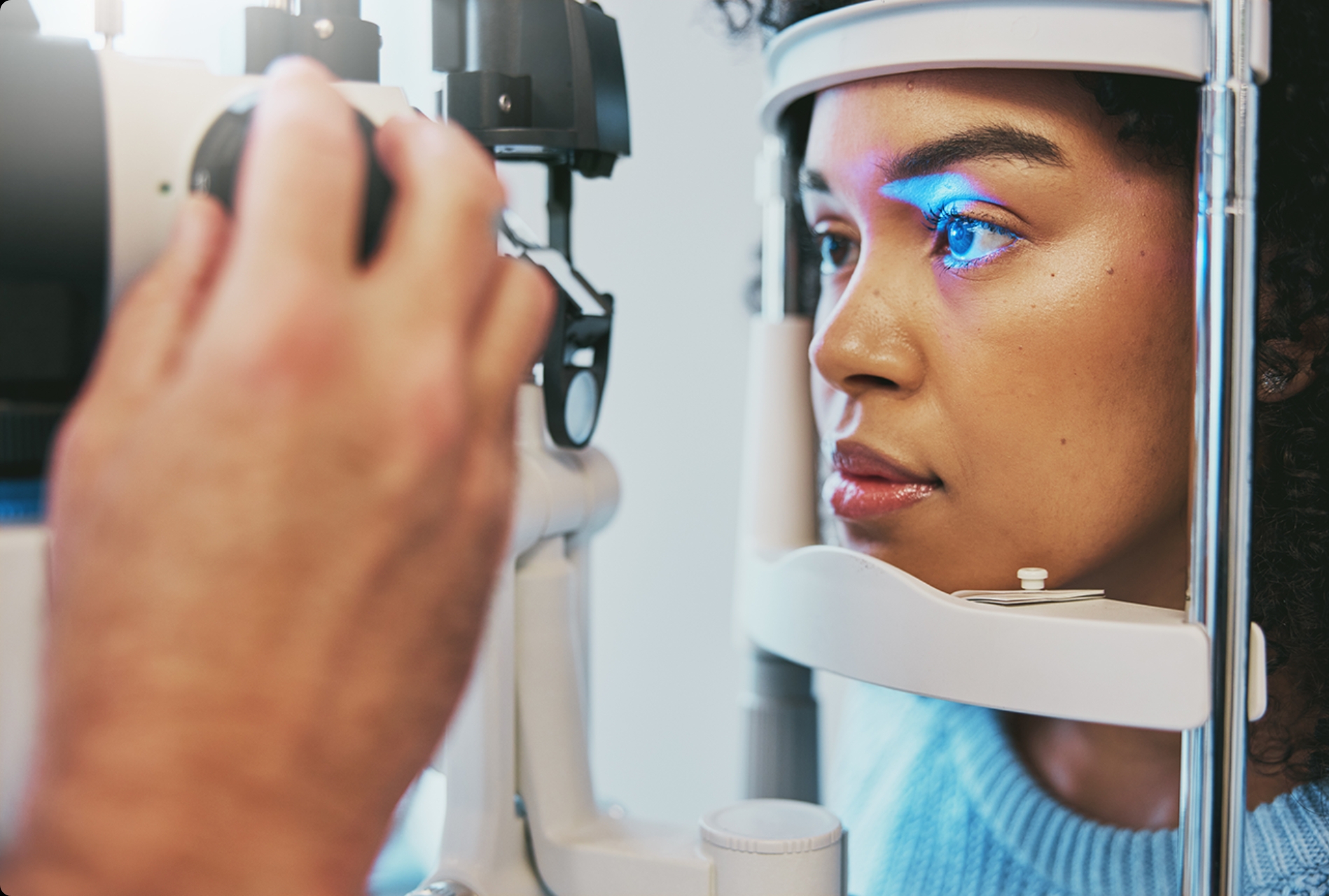
Perhaps the best way to know the difference is to understand the complexity of an in-person exam. Doctors ask about your medical and ocular history along with your family’s history so they can assess your risks. They test for visual acuity to learn how well you see. To do this, they evaluate muscle movement, depth perception, color vision, peripheral fields and pupillary reactions.
Doctors also take corneal measurements for contact lens fittings to make sure lenses won’t prevent oxygen from reaching your corneas. Intraocular pressure readings catch indications of glaucoma. After dilation, a slit-lamp exam detects macular degeneration, retinal problems, changes in the optic nerve, cataracts and other conditions.
Once the doctor establishes a visual baseline, annual dilated exams may reveal the smallest changes that may act as warning signs. Patients who bypass in-person exams increase the risk of discovering an illness too late to prevent vision loss.
When Telemedicine Makes Sense (And When It Doesn’t)
Telemedicine has legitimate medical uses. In remote areas with limited access to eye care, technologies like fundus photography allow specialists to evaluate retinal images and prioritize patients who need immediate care versus those who can safely wait 6-12 months for in-person visits.
The Veterans Administration uses these technologies successfully because they’re supervised by ophthalmologists, use professional-grade equipment, and serve as triage tools—not replacements for comprehensive care.
The key difference: Medical-grade telemedicine is performed by trained technicians using specialized equipment, with images reviewed by board-certified ophthalmologists. Consumer online vision tests use your smartphone or computer screen—a completely different standard of care.
Don’t Risk Your Vision on a Shortcut
While online eye tests may seem convenient, they’re not a substitute for comprehensive eye care in Charlotte. Vision is about more than just seeing clearly—it’s about protecting your long-term eye health and detecting serious conditions before they threaten your sight. The few dollars and minutes you might save with an online test pale in comparison to the value of catching glaucoma, diabetic retinopathy, macular degeneration, or other sight-threatening conditions early when treatment is most effective.
Your eyes deserve more than a screen test. Schedule a comprehensive eye examination with experienced ophthalmologists and optometrists who use advanced diagnostic technology to evaluate not just your vision, but your overall eye health. Many eye diseases show no symptoms until significant damage has occurred—a thorough in-person exam is your best defense.
To schedule an exam at Horizon Eye Care, schedule online or call (704) 365-0555.