


Medically reviewed by
Randall N. Stein, MD
Perhaps you’ve heard that glaucoma occurs when pressure increases in your eye, which can lead to a permanent loss of vision. If you or a loved one has been diagnosed with glaucoma, you may wonder how eye pressure damages the eye. You may also wonder what the value “should” be.

Why Does Eye Pressure Matter in Glaucoma?
Imagine a TV plugged into the wall by a power cord. If you cut or damage the power cord, the screen goes black. That’s exactly what happens in glaucoma. Each eye has an optic nerve, which is the “power cord” that connects the eye to the brain. The optic nerve can be damaged by many things. In glaucoma, the optic nerve gets damaged because of eye pressure that is too high for that particular eye. Usually, damage from eye pressure (glaucoma) happens very slowly and without any symptoms that patients would notice until significant vision has been lost.
Understanding the “Normal” Range
The normal range for intraocular pressure (IOP) is around 10 to 21 millimeters of mercury (mmHg). However, this range is somewhat misleading. About half of all patients who develop glaucoma never have a “high” eye pressure reading by these standards. In those patients, even a “normal” eye pressure needs to be lowered further. This type of glaucoma is called normal-tension glaucoma (NTG), and it demonstrates that the “right” pressure for your eyes depends on how sensitive your optic nerve is to pressure.
Think of it this way: some people can carry a 50-pound backpack all day without problems, while others would struggle with just 20 pounds. Similarly, some optic nerves can tolerate higher pressures without damage, while others are more fragile and get damaged even at pressures within the “normal” range.
What is the Goal of Glaucoma Treatment?
Since high eye pressure (relative to your optic nerve’s tolerance) is the problem, the goal of treatment is to lower the value to a safe level for your specific eyes. This “safe” level, often called the “target pressure” or “goal pressure” by glaucoma specialists, is individualized for every eye, meaning that the “safe level” can be different even between the two eyes of the same patient.
How Target Pressure is Determined
Ophthalmologists around the world have conducted many large clinical research trials to study glaucoma. In this process, we have learned that lowering the pressure by 20 to 30 percent is usually a good starting point for most glaucoma patients. However, the specific target depends on several important factors.
Severity of Glaucoma Damage
- Mild glaucoma: Initial target IOP range of 15-17 mmHg
- Moderate glaucoma: Target IOP range of 12-15 mmHg
- Severe glaucoma: Target IOP range of 10-12 mmHg or lower
The worse the initial condition of your eye, the lower the pressure needs to be to prevent further loss or blindness. This principle has been supported by results from several major clinical trials. Patients with advanced disease benefit from more aggressive IOP reduction to slow progression.
Your Baseline Pressure
To know where to begin, we need to know what the “baseline” or usual eye pressure is for every patient. Eye pressure, like blood pressure, varies throughout the day, sometimes by several points. So, patients may need to come in more than once before starting or changing treatment.
Other Risk Factors:
- Age and life expectancy
- Family history of glaucoma
- Other eye conditions
- Overall health and cardiovascular status
- Quality of life considerations
Why Eye Pressure Varies Throughout the Day
Eye pressure is not a constant number. In healthy people, IOP naturally varies by 2 to 6 mmHg over a 24-hour period. In glaucoma patients, these variations can be even larger. Understanding these fluctuations is important for managing your condition effectively.
Diurnal Fluctuation Patterns
Most people experience their highest eye pressure in the morning hours, though this pattern varies from person to person. Some patients have peak pressures during office hours, while others have their highest readings outside normal clinic hours (between 6 PM and 8 AM). This is why a single pressure reading during a routine office visit may not tell the complete story.
For patients with normal-tension glaucoma, nighttime pressure patterns are particularly important. Studies have shown that some NTG patients have higher pressures during the early morning hours between 2:00 AM and 6:00 AM when blood pressure is lowest. This combination of relatively elevated eye pressure and reduced blood flow to the optic nerve can contribute to glaucoma progression.
When Additional Monitoring May Be Needed
If your glaucoma appears to be worsening despite treatment, or if your doctor suspects you may have pressure spikes outside of normal office hours, you might need more extensive pressure monitoring. Some patients benefit from:
- Multiple measurements at different times of day
- Morning and afternoon visits on separate days
- In rare cases, 24-hour monitoring to capture the full range of pressure variation
This additional information helps your glaucoma specialist set the most appropriate target pressure and choose the best treatment strategy for your specific situation.
Monitoring is Vital
Your target pressure can change over time. If we notice your glaucoma is worsening even after you’ve met your initial goal pressure, we may lower your target pressure further to keep you safe. On the other hand, if your glaucoma remains extremely stable for years, we may be able to raise the target pressure and perhaps reduce your medications.
This flexibility is important because glaucoma is a chronic disease that requires lifelong management. Your eyes and overall health may change over the years, and your treatment plan should adapt accordingly.
Treatment Options
Treatments for glaucoma include prescription eye drops, lasers, and/or surgeries. The American Academy of Ophthalmology recommends that glaucoma is optimally managed by reducing IOP by 25%, which can be obtained individually or by a combination of these treatment methods.
Prescription Eye Drops are typically the first line of treatment. Several classes of medications work in different ways:
- Prostaglandin analogues help fluid drain better from your eye
- Beta-blockers decrease the amount of fluid your eye produces
- Alpha agonists both decrease fluid production and increase drainage
- Carbonic anhydrase inhibitors reduce fluid production
Laser Treatments like Selective Laser Trabeculoplasty (SLT) can effectively lower eye pressure by improving the eye’s natural drainage system. Recent studies, including the LiGHT trial, have shown that SLT can be as effective as medication for many patients and may even be considered as a first-line treatment option.
Surgical Options range from minimally invasive glaucoma surgeries (MIGS) to traditional filtering procedures like trabeculectomy. Surgery is typically reserved for patients who need more significant pressure reduction or who have difficulty with medications.
How Do You Know if Your Treatment is Working?
Glaucoma worsening usually has no symptoms, and it cannot be cured or reversed. Since there are no symptoms, the only way to know if it is worsening is to come to your appointments.
Monitor Your Eye Pressure
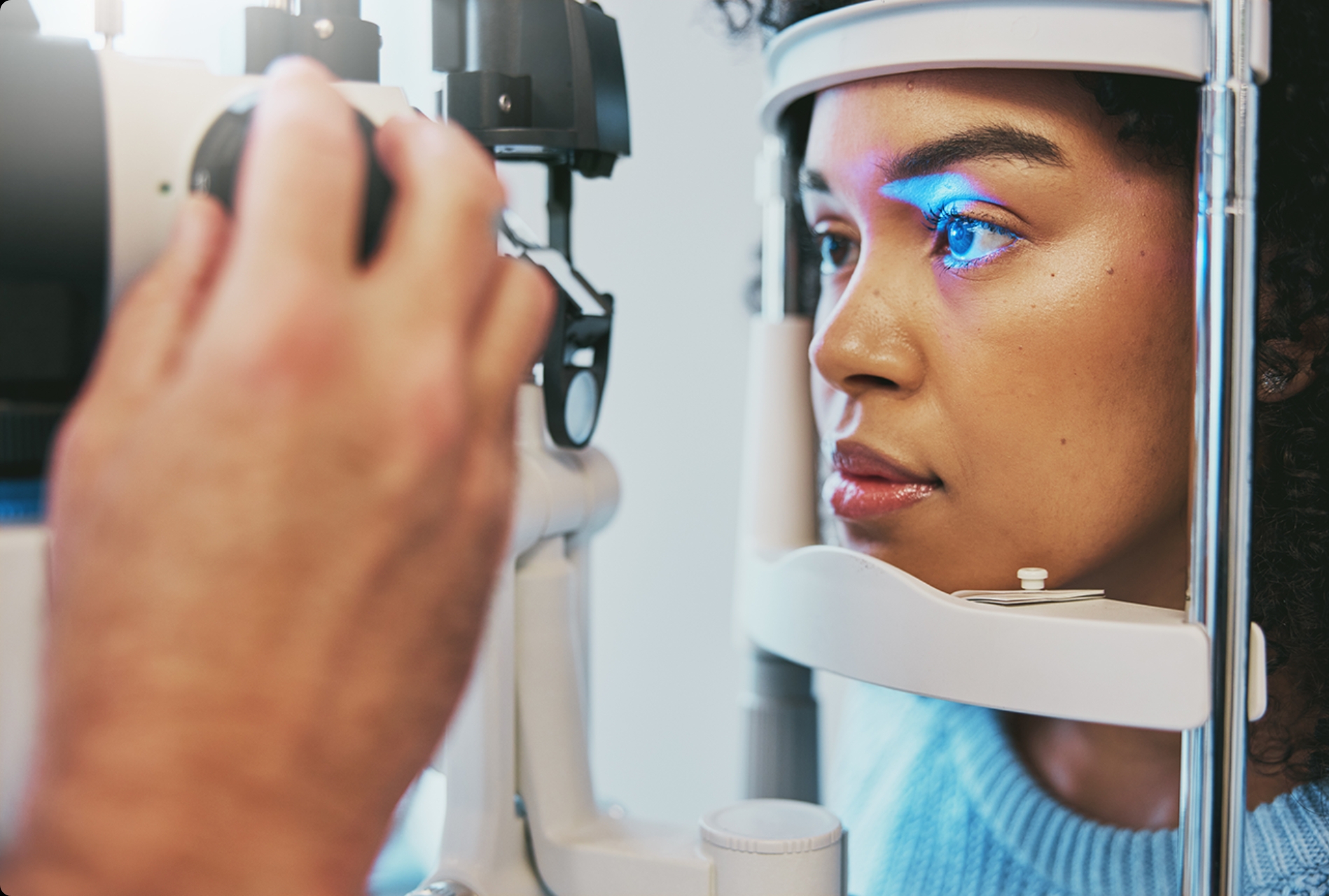
Regular pressure checks at different times help establish patterns and ensure your treatment is keeping pressure within your target range.
Examine Your Optic Nerve
Your Charlotte ophthalmologist will look directly at your optic nerve during each visit, watching for any changes in its appearance that might indicate progression.
Perform Optic Nerve Scans
Advanced imaging technologies like OCT (Optical Coherence Tomography) provide detailed measurements of the optic nerve and retinal nerve fiber layer, allowing detection of even subtle changes over time.
Conduct Visual Field Tests
These tests map your peripheral vision and can detect blind spots before you notice them yourself. Comparison of visual fields over time shows whether your glaucoma is stable or progressing.
Review Your Overall Health
For patients with normal-tension glaucoma, your doctor may ask about your blood pressure and cardiovascular health. Very low blood pressure, especially during sleep, can affect blood flow to the optic nerve and influence glaucoma progression.
Special Considerations for Normal-Tension Glaucoma
If you have normal-tension glaucoma, your treatment approach may involve some additional considerations:
- Your target pressure will likely be even lower than for patients with high-pressure glaucoma, often requiring a 30% reduction from your baseline
- Your doctor may inquire about symptoms of blood vessel problems such as migraine headaches, cold hands and feet, or low blood pressure
- If you take medications for high blood pressure, your doctor may want to ensure you’re not being over-treated, as excessively low blood pressure can reduce blood flow to your optic nerve
- More frequent monitoring may be recommended, as NTG can be more challenging to manage
The Importance of Compliance
One of the most critical factors in successful glaucoma management is medication compliance. If you’ve been prescribed eye drops:
- Use them exactly as directed, even if you feel fine
- Try to take them at the same time each day to maintain consistent pressure control
- Don’t skip doses or stop medications without consulting your doctor
- Let your doctor know if you’re having side effects or difficulty using the drops
- Remember that missed doses can allow pressure spikes that damage your optic nerve
Studies show that many patients struggle with the burden of multiple daily eye drops. If this is challenging for you, talk to your glaucoma specialist about alternatives like:
- Combination medications (two drugs in one bottle)
- Sustained-release treatments like the DURYSTA implant
- Laser treatments that may reduce or eliminate the need for drops
- Surgical options for long-term pressure control
Questions to Ask Your Glaucoma Specialist
Being an informed patient helps you participate actively in your care.
- What is my target eye pressure, and how was it determined?
- How severe is my glaucoma (mild, moderate, or severe)?
- How often will my pressure be checked?
- Are my current pressures meeting the target?
- Do I have normal-tension glaucoma or high-pressure glaucoma?
- Should I be concerned about pressure fluctuations?
- What changes in my vision should I report immediately?
- How often will my visual fields be tested?
The Good News
While glaucoma cannot be cured and vision loss cannot be reversed, the vast majority of patients who follow their treatment plans and attend regular eye exams can maintain their vision and quality of life. Modern treatments are more effective and better tolerated than ever before, with new options continuing to emerge.
Remember, glaucoma management is a partnership between you and your eye care team. By understanding your target pressure, following your treatment plan, and keeping your appointments, you give yourself the best chance of preserving your vision for years to come.
Our fellowship-trained glaucoma specialists at Horizon Eye Care are ready to develop a personalized treatment plan that keeps your eye pressure at the safest level for your eyes. Don’t wait for symptoms, schedule your comprehensive glaucoma evaluation today.