
Every year, approximately 100,000 eye injuries occur from sports and recreational activities in the United States, with more than 42,000 requiring emergency room visits according to Prevent Blindness. The tragedy? Up to 90% of these injuries are preventable with proper protective eyewear.
Whether you’re a parent watching your child step onto a baseball field, an adult recreational athlete, or a serious competitor, understanding sports eye safety could save your vision or your child’s.
Why Sports Eye Injuries Happen
Eye injuries occur in virtually every sport, but some carry higher risk than others. According to the American Academy of Ophthalmology, eye injury is the leading cause of blindness in children in the United States, with one-third of all sports-related eye injuries involving children.
High-risk sports for eye injuries
- Baseball/Softball: Fast-moving balls traveling up to 90 mph
- Basketball: Leading cause of sports-related eye injuries (elbows, fingers, ball impacts)
- Racquet sports: Balls and racquets at close range
- Ice hockey: Pucks and sticks traveling at high speeds
- Lacrosse: Sticks and balls in close contact
- Water sports: Diving injuries and chemical exposure
- Combat sports: Boxing, martial arts, wrestling
Moderate-risk sports requiring protection
- Soccer, football (despite helmets), tennis, fishing (hook injuries), golf
Types of Sports Eye Injuries
Blunt Trauma
Impact from balls, elbows, or equipment can cause:
- Black eyes and bruising
- Corneal abrasions (scratches on the eye surface)
- Hyphema (bleeding inside the eye)
- Orbital fractures (broken bones around the eye)
- Retinal detachment
- Traumatic cataracts
Penetrating Injuries
Sharp objects like fishing hooks, broken equipment, or foreign debris can penetrate the eye, causing potentially permanent damage.
Radiation Damage
UV exposure during outdoor sports (especially at high altitude or on water/snow) can damage eyes over time, increasing risk of cataracts and macular degeneration.
The Right Protection for Each Sport
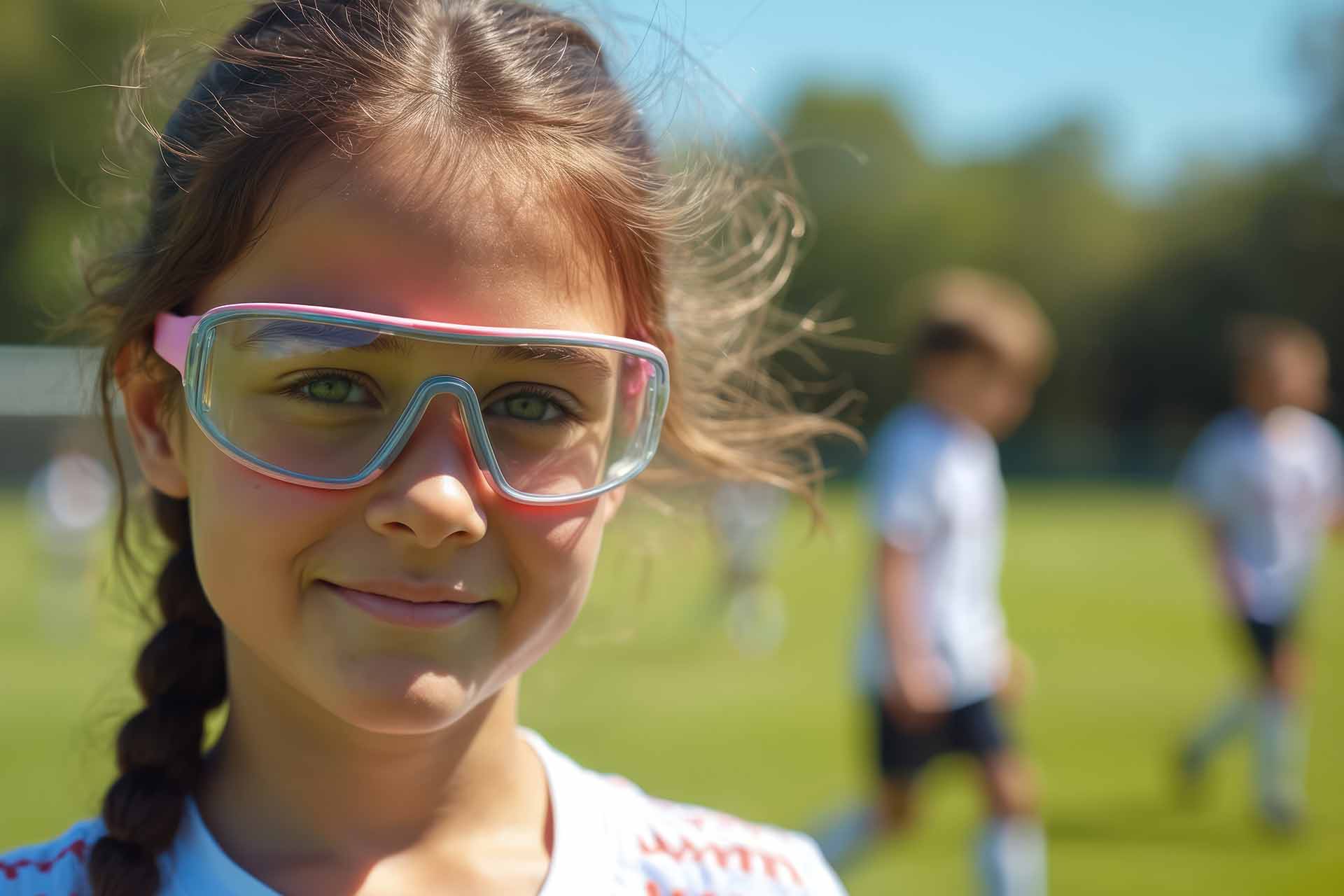
Not all protective eyewear is created equal. Sports-specific protection is crucial because different sports pose different risks.
Polycarbonate Lenses: The Gold Standard
Protective eyewear must have polycarbonate lenses, which are:
- 10 times more impact-resistant than regular plastic
- Shatterproof even under extreme impact
- Lightweight for comfortable extended wear
- UV protective to block harmful radiation
Regular prescription glasses, contact lenses, and sunglasses do NOT protect against sports injuries. Safety goggles must be worn over contact lenses or instead of regular glasses.
Sport-Specific Protection Requirements
Baseball/Softball
- ASTM F803-approved sports glasses or face guards
- Batters and base runners: helmet with face guard
- Fielders: sports goggles designed for baseball
Basketball
- ASTM F803-approved sports goggles
- Especially important for players with previous eye injuries or vision in only one eye
Hockey
- Full polycarbonate face mask or wire shield (not half shield)
- Must be certified by Hockey Equipment Certification Council (HECC) or Canadian Standards Association (CSA)
- Never play without face protection, even in practice
Racquet Sports
- ASTM F803-approved sports goggles with polycarbonate lenses
- Regular glasses offer no protection and can shatter on impact
Swimming/Water Sports
- Tight-fitting goggles to protect from chemicals and impact
- Never swim in contact lenses (risk of serious infection)
Football
- Full-face helmet with polycarbonate face shield
- Eye shields must be clear or amber (no tinted shields in high school)
Choosing the Right Protective Eyewear
Look for these certifications and features:
- ASTM (American Society for Testing and Materials) standards for your specific sport
- Polycarbonate lenses (mandatory for sports protection)
- Proper fit – eyewear that moves during play offers no protection
- Prescription options – many sports goggles accommodate prescriptions
- Ventilation – reduces fogging during play
- Padding – increases comfort and impact absorption
Special Considerations for Different Athletes
Children and Teens
Children are at higher risk because:
- Their reflexes and reaction times are still developing
- They may not recognize dangerous situations
- Peer pressure can discourage wearing protection
- Their eyes are still developing and more vulnerable to injury
Parents should:
- Insist on proper eye protection from the start (make it non-negotiable)
- Ensure protective eyewear fits properly and is sport-appropriate
- Replace damaged or outgrown equipment promptly
- Set a good example by wearing protection themselves
- Check that coaches require and enforce eye protection
Athletes with Pre-Existing Vision Issues
If you have reduced vision in one eye, or conditions like high myopia, previous retinal surgery, or only one functional eye, the stakes are even higher. Losing vision in your better eye could mean permanent severe visual impairment.
Before participating in high-risk sports
- Consult with your Charlotte ophthalmologist about appropriate protection
- Consider whether the sport’s risk level is acceptable
- Always wear maximum protection if you choose to participate
- Consider alternative lower-risk activities
Contact Lens Wearers
Athletes who wear contact lenses should:
- Always wear sport-appropriate protective goggles over contacts
- Never swim in contact lenses (risk of serious Acanthamoeba infection)
- Carry backup glasses for after games/practice
- Use daily disposable lenses to minimize infection risk
- Keep rewetting drops available for dry, dusty conditions
What to Do If an Eye Injury Occurs
For minor eye injuries (dust, small particles)
- Don’t rub the eye
- Flush with clean water or saline
- If irritation persists beyond a few minutes, seek medical attention
For serious eye injuries (impact, penetrating injuries, blood in eye)
- DO NOT touch, press, or rinse the eye
- DO NOT try to remove objects stuck in the eye
- DO NOT apply ointments or medications
- Cover the eye gently with a protective shield (paper cup works)
- Seek emergency care immediately
Call 911 or go to the emergency room if you experience:
- Blood in the white or colored part of the eye
- One eye not moving as well as the other
- One eye sticks out compared to the other
- Unusual pupil size or shape
- Something embedded in the eye
- Vision loss or double vision
- Severe pain or swelling
Beyond Eye Protection: Concussion Awareness
Eye injuries often accompany head injuries. Athletes, parents, and coaches should be aware that vision changes can signal concussion:
- Blurred or double vision
- Sensitivity to light
- Difficulty focusing
- Balance problems
Official Eye Care Provider for the Charlotte Checkers
As the official ophthalmology provider for the Charlotte Checkers, Horizon Eye Care understands the unique vision needs of athletes at every level. Our experienced ophthalmologists provide comprehensive eye care for athletes, including:
- Sports vision assessments
- Protective eyewear fitting and recommendations
- Emergency eye injury treatment
- Post-injury follow-up care
- Vision optimization for athletic performance
Whether you’re a professional athlete, weekend warrior, or parent of a young player, we can help protect your vision on and off the field.
Frequently Asked Questions about Sports Eye Safety
At what age should kids start wearing sports eye protection?
Children should wear appropriate eye protection from the moment they start organized sports. Many eye injuries occur in young children during practice or recreational play, not just competitive games.
Can I wear regular prescription glasses for sports?
No. Regular glasses can shatter on impact, causing additional injury. Sports-specific eyewear with polycarbonate lenses is required. Many sports goggles can accommodate prescriptions.
Do helmets protect eyes?
Helmets protect the skull and brain but don’t prevent eye injuries from balls, fingers, or sticks entering through the face opening. Sports like football, hockey, and baseball require additional eye/face protection.
How much does sports protective eyewear cost?
Quality sports goggles typically range from $50-150, with prescription options costing more. Consider this a small investment compared to emergency room visits, surgery, or permanent vision loss.
Will protective eyewear affect my child’s performance?
Properly fitted sports eyewear should not impair performance. In fact, clear vision and confidence that eyes are protected often improve athletic performance.
Protect Your Vision, It’s Worth It
Sports participation offers tremendous physical, mental, and social benefits. Don’t let a preventable eye injury sideline you or your child permanently. With proper protective eyewear and awareness of risks, you can enjoy sports safely throughout your lifetime.
Schedule a sports vision consultation at Horizon Eye Care to discuss protective eyewear options and ensure your eyes are healthy and ready for athletic activities.